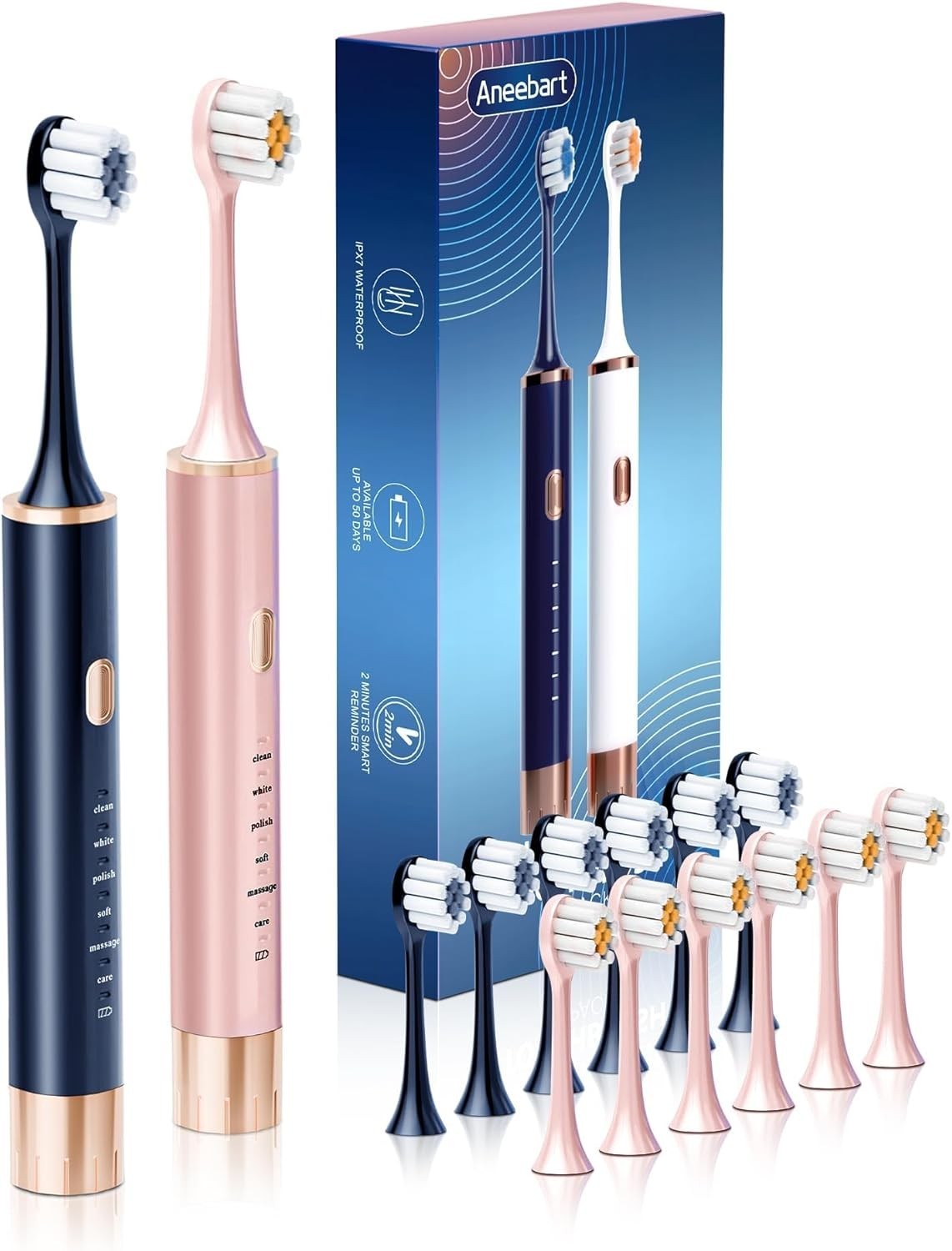

Photos from current listings. Actual item, color, and included accessories may vary.
Travel Electric Toothbrush Buying Guide
A travel electric toothbrush is a compact, battery- or USB-powered brush designed for portability, where the core trade-off is motor power and cleaning effectiveness versus size, weight, and battery convenience. Durable options use sonic or oscillating-rotating motors with sealed IPX7 construction and standardized USB-C or AA power, while compromises rely on weak brushed motors, proprietary chargers, or non-replaceable batteries.


At a glance
- Category
- Oral Care
- Data updated
- Nov 15, 2026
Current offers
Highlights
- Sonic motors vibrate at 15,000–40,000 strokes/min; oscillating-rotating heads spin at 7,000–9,000 oscillations/min with 20,000–40,000 pulsations/min.
- IPX7 waterproof rating is the minimum for safe rinsing and bathroom use; IPX6 or unrated handles fail in humid travel pouches.
- Replaceable heads are the hidden long-term cost: brush heads should be cross-compatible with major brands or sold in 4+ packs with clear model codes.
- USB-C charging (5V) has replaced micro-USB and proprietary docks; AA-powered handles remain the only option for weeks-long off-grid trips.
Best use cases
- Best for frequent flyers: pick a USB-C rechargeable sonic handle under 100 g with a hard travel cap—skip bulky oscillating-rotating models that need a charging dock.
- Best for camping and off-grid travel: choose an AA-powered or single-AAA brush with 2+ week battery life—skip lithium-ion handles that self-discharge in storage.
- Best for shared bathrooms and family travel: buy a multi-pack with color-coded heads and a single USB-C cable—skip single-handle premium brushes with proprietary magnetic chargers.
Buying tips
- Match motor type to cleaning need: sonic (vibration) suits sensitive gums and tight spaces; oscillating-rotating (round head) removes more plaque but is louder and heavier.
- Check battery chemistry: lithium-ion holds charge 2–3 weeks; NiMH drains in 7–10 days; AA alkaline lasts 3–4 weeks but adds disposable cost.
- Verify head compatibility: standard sonic heads use a metal shaft with a push-on collar; oscillating-rotating heads use a pin-and-slot mount—never mix.
- For carry-on travel, keep handle length under 19 cm and weight under 120 g including cap to fit Dopp kits and TSA liquids bags.
Specs
| Motor Type | Sonic vs Oscillating-Rotating |
|---|---|
| Waterproof Rating | IPX7 vs IPX6 |
| Battery Life | 7–21 days per charge |
| Charging Standard | USB-C 5V vs AA vs Proprietary |
Related searches
What to check before buying
- Measure your toiletry bag or travel case: handle plus head must fit under 20 cm length and 3 cm diameter to avoid breakage in transit.
- Confirm voltage: USB-C 5V charging works worldwide with a plug adapter; avoid 110V-only charging bases for international trips.
- Check head replacement availability: ensure the model uses heads sold in multi-packs or cross-compatible with mainstream brands (e.g., Sonicare E-series, Oral-B iO).
- Verify waterproof rating: IPX7 allows full rinsing; IPX6 only resists splashes and should not be submerged or stored wet.
FAQ
Data sources: eBay / Amazon listings and product attribute feeds Data updated Nov 15, 2026.
Some links on this page are affiliate links. If you buy after clicking one, we may earn a commission at no extra cost to you. This does not change which products appear here or their order. Affiliate disclosure.