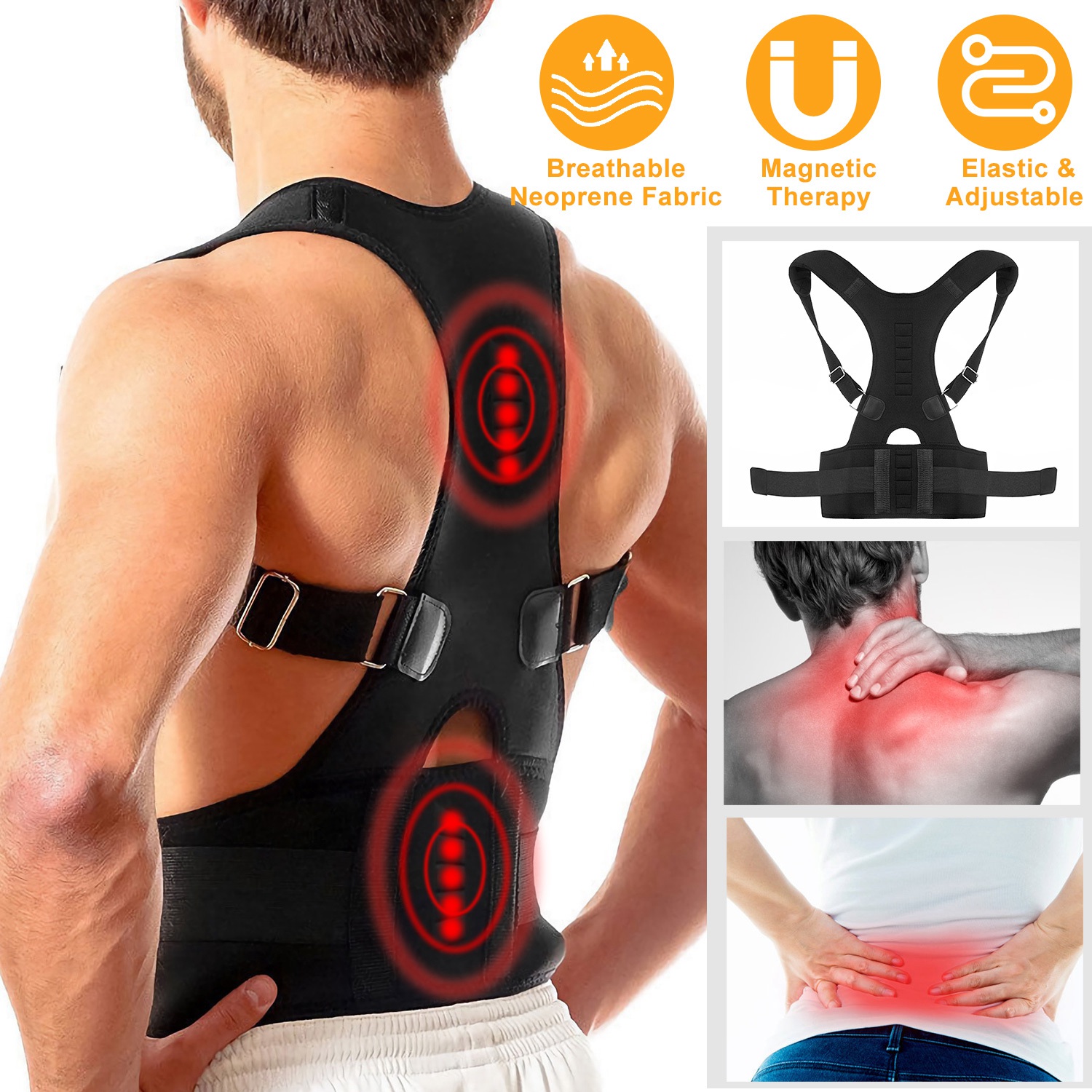

Photos from current listings. Actual item, color, and included accessories may vary.
Posture Corrector Buying Guide
A posture corrector is a wearable orthotic that retrains shoulder and spinal alignment using tension straps, rigid stays, or elastic compression. The core trade-off is between corrective tension and comfort: high-tension clavicle braces retrain posture faster but restrict movement, while low-profile elastic supports offer all-day wear with minimal feedback. The decision rule is simple—choose an adjustable rigid-stay brace for active correction sessions and an elastic posture shirt for passive all-day reminders.


At a glance
- Category
- Health Monitors & Medical Aids
- Data updated
- Nov 15, 2026
Current offers
Highlights
- Clavicle braces use two posterior crossing straps anchored at the thoracic spine to pull shoulders back; tension is set by strap length, so full adjustability (hook-and-loop) is the key durability and fit metric.
- Rigid vertical stays (usually aluminum or high-density polyethylene) prevent spinal rounding and are essential for thoracic kyphosis correction; foam-only or plastic-strip models offer reminder feedback only.
- Elastic posture shirts and sleeves use graduated compression (typically 15–25 mmHg) to cue alignment without limiting range of motion—best for desk workers and mild slouching.
- Breathable fabric grade matters: perforated neoprene or 3D spacer mesh prevents heat rash during 1–2 hour sessions; cheap non-woven fabric traps sweat and loses elasticity after repeated wash cycles.
Best use cases
- Best fit: office workers with rounded shoulders from screen time — pick a slim elastic posture shirt or low-profile brace with soft edges for 1–2 hour wear under clothing; skip rigid clavicle braces that show under shirts.
- Best fit: post-injury or chronic slouching needing active retraining — choose an adjustable clavicle brace with rigid stays and padded underarm straps; skip compression sleeves that provide only passive cueing.
- Best fit: women wanting discreet support — select a brace with thin shoulder straps and a low-back design that avoids bra-line pressure; skip bulky lumbar-belt hybrids that ride up when seated.
- Wrong fit: anyone with acute back pain, scoliosis, or nerve symptoms — these devices are postural reminders, not medical treatment; a rigid brace worn all day can weaken supporting muscles.
Buying tips
- Measure chest circumference at the widest point and match to the brace's size chart; a brace that is too small digs into the armpits and restricts breathing, while too large provides zero corrective tension.
- Choose hook-and-loop adjustable straps over fixed-length elastic; adjustability lets you progress tension as posture improves and accommodates clothing layers.
- For active correction, select a model with two rigid posterior stays plus padded underarm sleeves; for passive reminder, pick a lightweight elastic shirt under 200 g.
- Check material against skin sensitivity: neoprene and latex-free elastic are safer for sensitive skin; avoid unlined plastic edges that cause chafing at the armpit and clavicle.
Specs
| Correction Type | Rigid clavicle brace vs elastic shirt |
|---|---|
| Tension Adjustment | Hook-and-loop adjustable vs fixed elastic |
| Support Structure | Dual rigid stays vs foam/plastic strips |
| Fabric Grade | Breathable spacer mesh vs neoprene vs non-woven |
Related searches
What to check before buying
- Measure chest circumference and torso length (shoulder to waist) before ordering; most braces fit chests from roughly 28 to 48 inches across sizes.
- Confirm the brace can be worn under or over clothing as intended—slim elastic shirts go under, rigid clavicle braces typically go over a thin shirt.
- Check strap width: underarm straps should be at least 1.5 inches wide with padding to prevent nerve compression and skin irritation.
- Verify washing instructions—most braces are hand-wash only; machine washing degrades elastic and hook-and-loop adhesion.
FAQ
Data sources: eBay / Amazon listings and product attribute feeds Data updated Nov 15, 2026.
Some links on this page are affiliate links. If you buy after clicking one, we may earn a commission at no extra cost to you. This does not change which products appear here or their order. Affiliate disclosure.