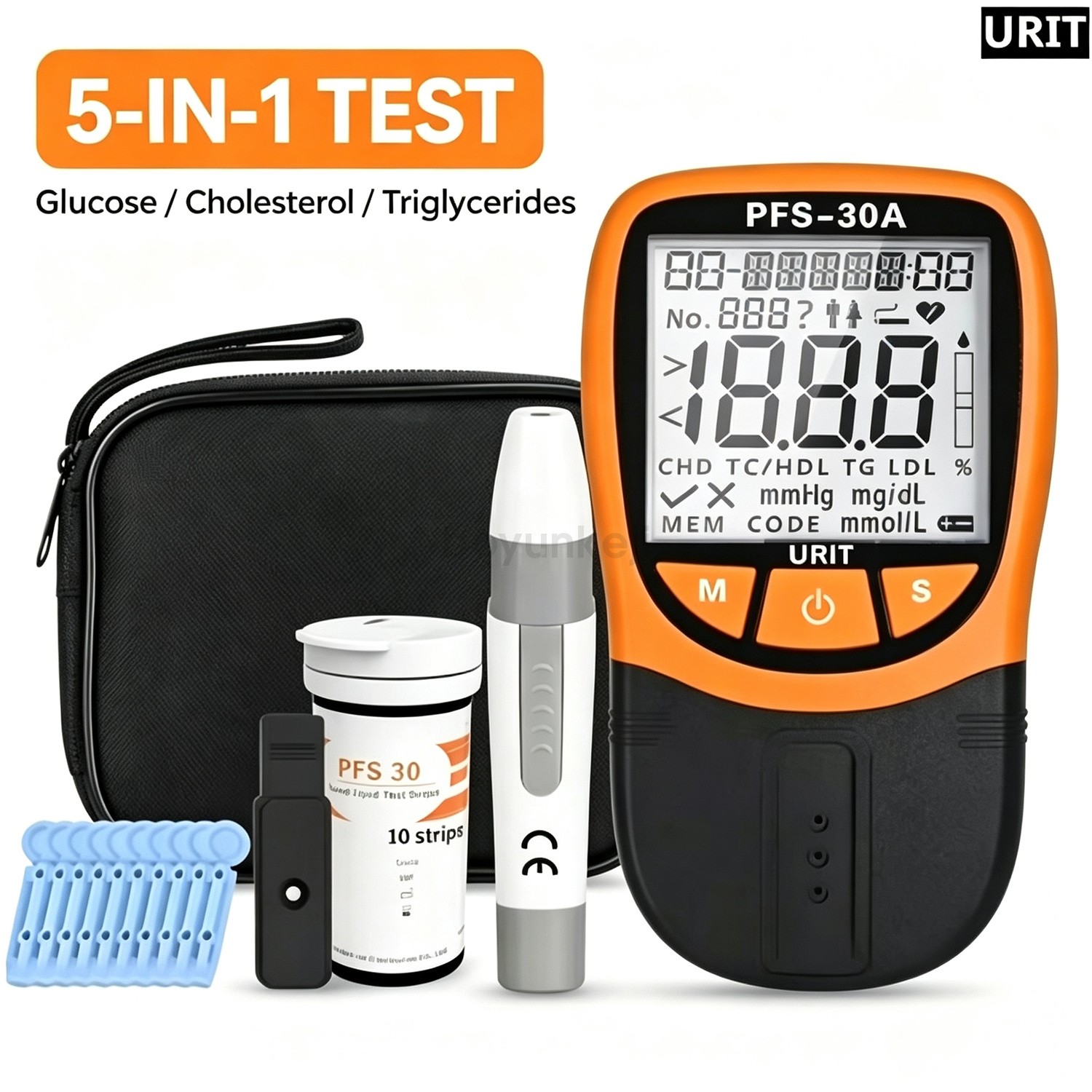

Photos from current listings. Actual item, color, and included accessories may vary.
Blood Lipid Meter Buying Guide
A blood lipid meter is a point-of-care photometric analyzer that estimates total cholesterol, HDL, LDL, and triglycerides from a fingerstick blood sample, trading clinical-lab precision for at-home convenience. The core trade-off is strip chemistry and calibration stability versus meter hardware: reusable meters are cheap, but the single-use test strips determine accuracy, shelf life, and per-test cost. Buy a meter only if you commit to its strip ecosystem and can accept that results are screening-grade, not diagnostic-grade, unless the system carries a recognized CE/IVD mark.


At a glance
- Category
- Health Monitors & Medical Aids
- Data updated
- Nov 15, 2026
Current offers
Highlights
- Most home units are 4-in-1 (TC, HDL, LDL, TG) or 5-in-1 (adds a calculated non-HDL or TC/HDL ratio); all use reflectance photometry with dry-reagent strips, not lab-grade enzymatic spectrophotometry.
- Strip chemistry is the accuracy bottleneck: strips are lot-coded and expire 12-18 months from manufacture, so a cheap meter with scarce or short-dated strips is a false economy.
- Fingerstick whole blood is the standard sample; capillary blood must be applied within seconds and the strip inserted immediately, or enzymatic reaction timing skews TC and TG results.
- Units with automatic lot-code reading and built-in quality-control strips reduce user error versus manual code entry, which is the leading cause of inconsistent home readings.
Best use cases
- Best fit: a wellness-tracking household that will test 1-2 times per month and wants trend data between annual lab draws — pick a 4-in-1 system with long-dated, readily restocked strips.
- Best fit: a caregiver monitoring a diagnosed patient under a clinician's guidance — choose a 5-in-1 unit with auto-coding and memory storage so results can be shared at appointments.
- Wrong fit: anyone self-diagnosing or adjusting statin/cholesterol medication — home meters are screening tools only; lab venous panels remain the diagnostic standard.
- Skip: one-off single-test buyers — a meter plus strip pack costs more than a single lab lipid panel and delivers less accuracy; use a clinic draw instead.
Buying tips
- Confirm the strip pack includes the meter's exact model family and lot; strips are model-specific and cross-model strips will misfeed or read invalid.
- Check strip expiry before bulk buying: order no more than 6-12 months of supply (10-25 strips) since dry chemistry degrades after opening and at high humidity.
- Require an IVD/CE mark or equivalent regulatory clearance on the meter and strips; unmarked 5-in-1 analyzers are sold as wellness devices with no accuracy claim.
- Prefer meters with automatic code recognition and a hematocrit range of roughly 30-55%; outside that range whole-blood readings are unreliable and should be deferred to a lab.
Specs
| Test Parameters | 4-in-1 (TC/HDL/LDL/TG) vs 5-in-1 |
|---|---|
| Sample Type | Fingerstick whole blood (capillary) |
| Strip Coding | Auto lot-code vs manual code entry |
| Regulatory Mark | IVD/CE marked vs wellness-only |
Related searches
What to check before buying
- Verify strip availability: the meter is worthless if replacement strips are out of stock or discontinued — confirm a restock source for your exact model before buying.
- Check storage conditions: strips need a cool, dry place below about 30°C/86°F and away from bathroom humidity; plan where the kit will live.
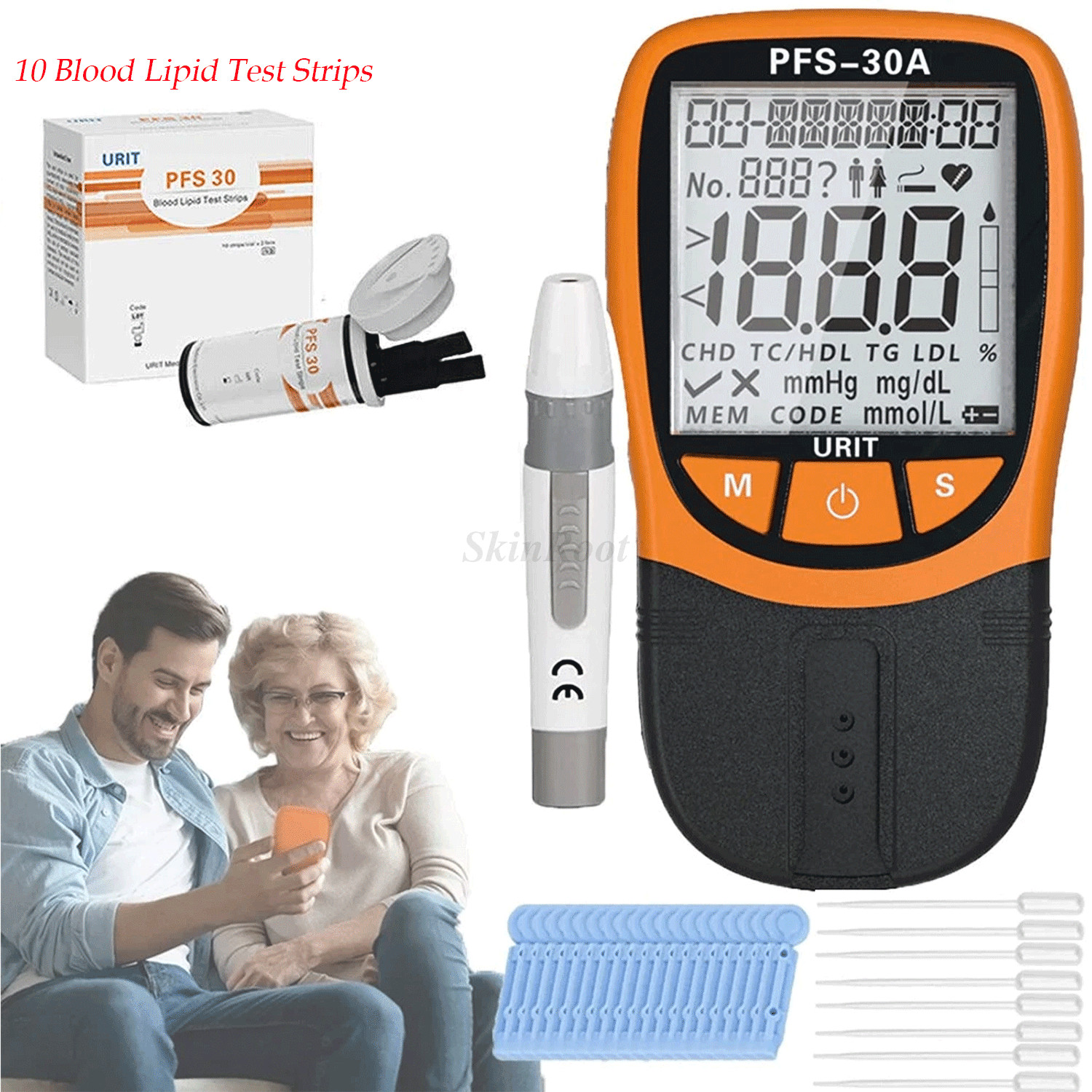
- Confirm the kit includes lancets, a lancing device, and capillary transfer tubes or a direct-application strip — many 10-strip bundles omit the lancing device.
- Ensure you can fast 9-12 hours before testing; triglycerides especially require fasting, so schedule morning tests and keep a log of fasting time.
FAQ
Data sources: eBay / Amazon listings and product attribute feeds Data updated Nov 15, 2026.
Some links on this page are affiliate links. If you buy after clicking one, we may earn a commission at no extra cost to you. This does not change which products appear here or their order. Affiliate disclosure.