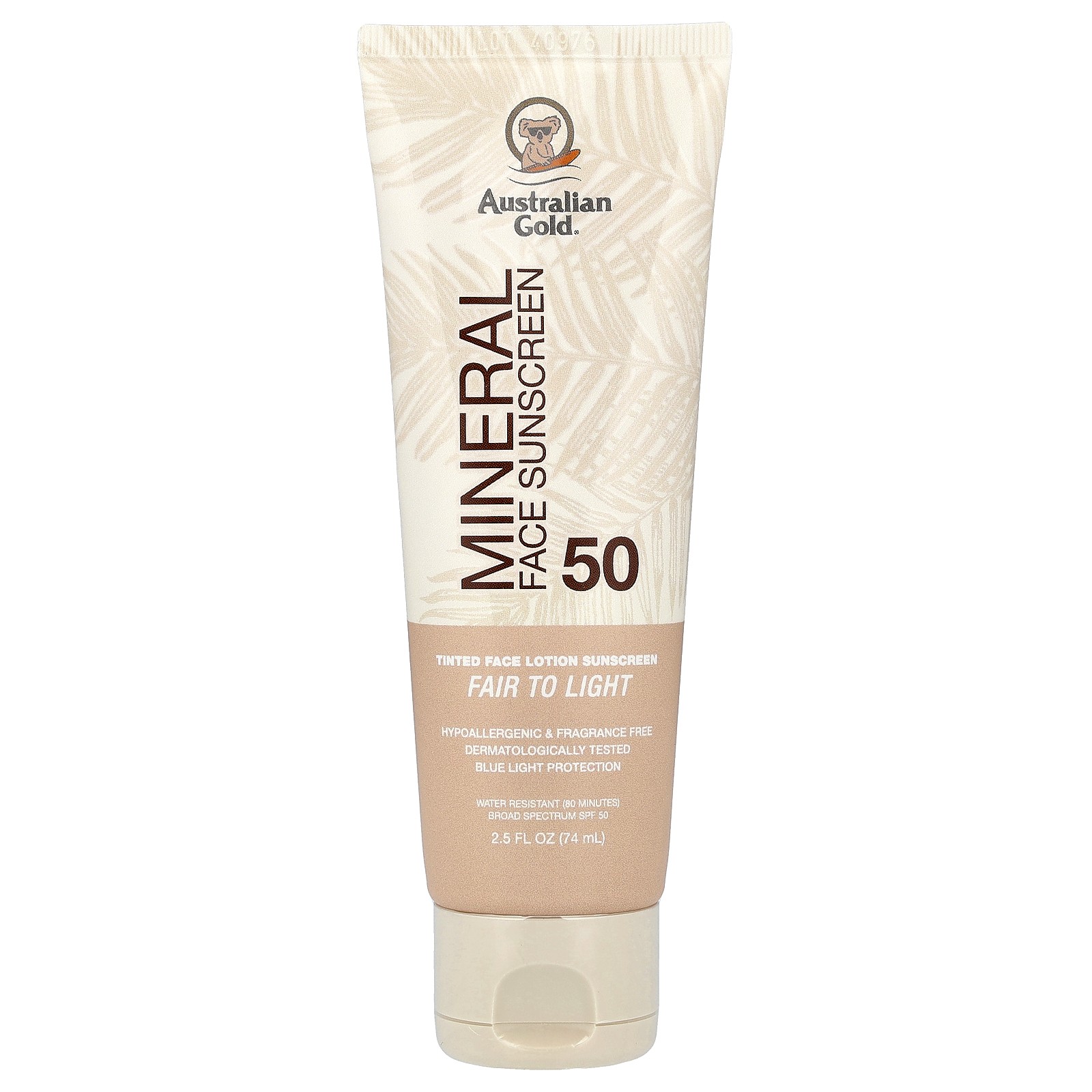

Photos from current listings. Actual item, color, and included accessories may vary.
Tinted Mineral Sunscreen Face Buying Guide
Tinted mineral face sunscreens combine non-nano zinc oxide or titanium dioxide UV filters with iron-oxide pigments that even out tone and block visible light. The core trade-off is tint depth versus blendability: universal sheer tints suit fair-to-medium skin, while deeper or olive undertones need dedicated medium-to-tan or deep shades with higher pigment load. The decision rule is simple: match the tint depth to your skin tone and demand non-nano mineral filters with SPF 30+ and broad-spectrum labeling; skip any tinted mineral that only offers a single 'universal' shade.


At a glance
- Category
- Sun Care
- Data updated
- Nov 16, 2026
Current offers
Highlights
- Mineral filters are either non-nano zinc oxide (broad UVA/UVB, gentle) or titanium dioxide (UVB-heavy, whiter cast); non-nano particles stay on skin surface and are reef-safe.
- Iron oxides in tinted formulas block visible light and blue light, which helps prevent melasma and post-inflammatory hyperpigmentation better than untinted mineral sunscreen.
- SPF 50 mineral formulas typically use 20-25% zinc oxide; SPF 30 uses 15-20%, so higher SPF means thicker texture and more cast unless tinted.
- Shade ranges matter: fair-to-light tints use low iron-oxide loads (1-2%), medium-to-tan uses 3-5%, and deep shades need 5%+ plus dispersing agents to avoid ashiness.
Best use cases
- Best fit: daily facial wear under makeup for fair-to-medium skin—pick a fair-to-light SPF 50 tinted mineral lotion in 2.5 fl oz; skip thick sport formulas.
- Best fit: melasma or post-acne pigmentation—choose a tinted mineral with iron oxides and SPF 50; skip chemical-filter sunscreens that lack visible-light protection.
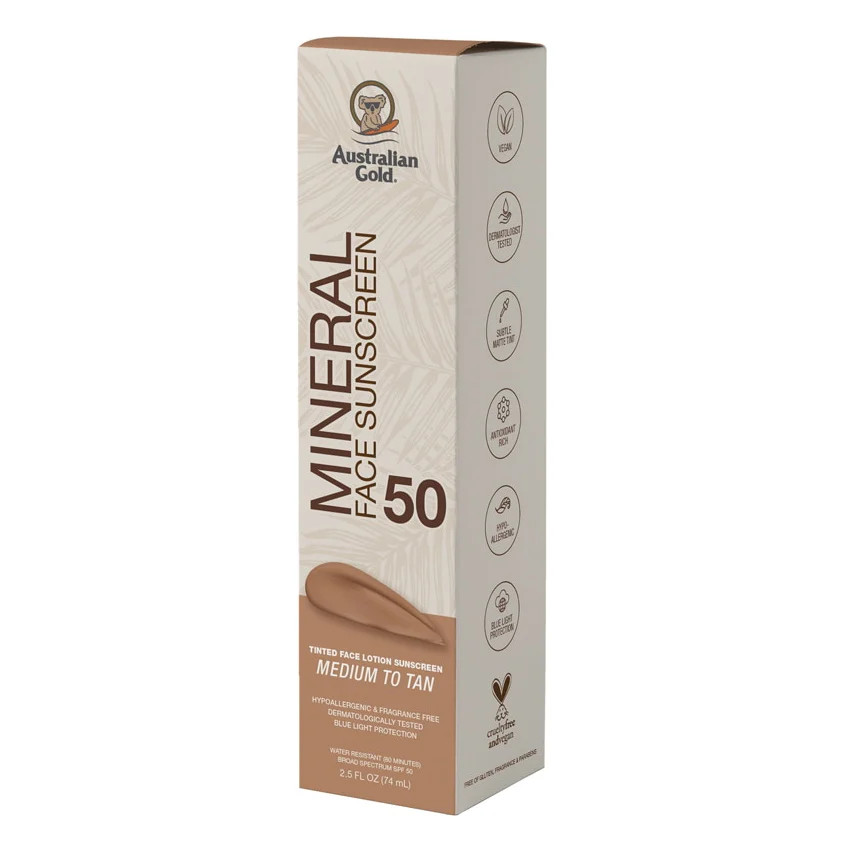
- Wrong fit: deep or rich skin tones buying 'universal' fair-to-light tints—these leave a grey cast; instead choose a dedicated medium-to-tan or deep shade line.
- Wrong fit: oily/acne-prone skin buying heavy 25% zinc formulas—look for gel-cream or fluid tinted minerals with silica or niacinamide instead.
Buying tips
- Measure your undertone: if your jaw looks pink/red, pick a fair-to-light neutral tint; if golden/olive, pick medium-to-tan; never buy a tint two shades lighter than your neck.
- Check the active ingredient percentage: 20%+ zinc oxide gives SPF 50 broad-spectrum; 15-20% zinc gives SPF 30; titanium-only formulas need 10%+ for adequate UVA.
- Prefer non-nano labeled zinc oxide (particle size >100nm) for reef-safe claims and lower absorption risk; nano formulas feel lighter but may not be reef-safe.
- Choose 2.5 fl oz (74 ml) for daily face use—that lasts about 6-8 weeks at 1/4 teaspoon per application; larger 3-4 oz sizes suit body-and-face use.
Specs
| Active Filter | Non-nano zinc oxide / titanium dioxide |
|---|---|
| SPF Rating | SPF 30-50 broad-spectrum |
| Tint Depth | Fair-to-light / medium-to-tan / deep |
| Face Size | 1.5-2.5 fl oz (44-74 ml) |
Related searches
What to check before buying
- Match tint depth to your inner wrist or jawline in natural light—fair-to-light for porcelain-to-light-beige, medium-to-tan for golden-to-caramel, deep for rich espresso tones.
- Verify SPF and broad-spectrum on the label: SPF 30+ mineral with non-nano zinc or titanium; avoid products listing only 'SPF' without a number.
- Check texture for your skin type: lotion for dry/normal, fluid or gel-cream for oily/acne-prone; avoid heavy balms under makeup.
- Confirm size and packaging: 2.5 fl oz (74 ml) tube for face-only daily use; larger pump bottles for face-and-body; ensure a flip-cap or pump for controlled dosing.
FAQ
Data sources: eBay / Amazon listings and product attribute feeds Data updated Nov 16, 2026.
Some links on this page are affiliate links. If you buy after clicking one, we may earn a commission at no extra cost to you. This does not change which products appear here or their order. Affiliate disclosure.