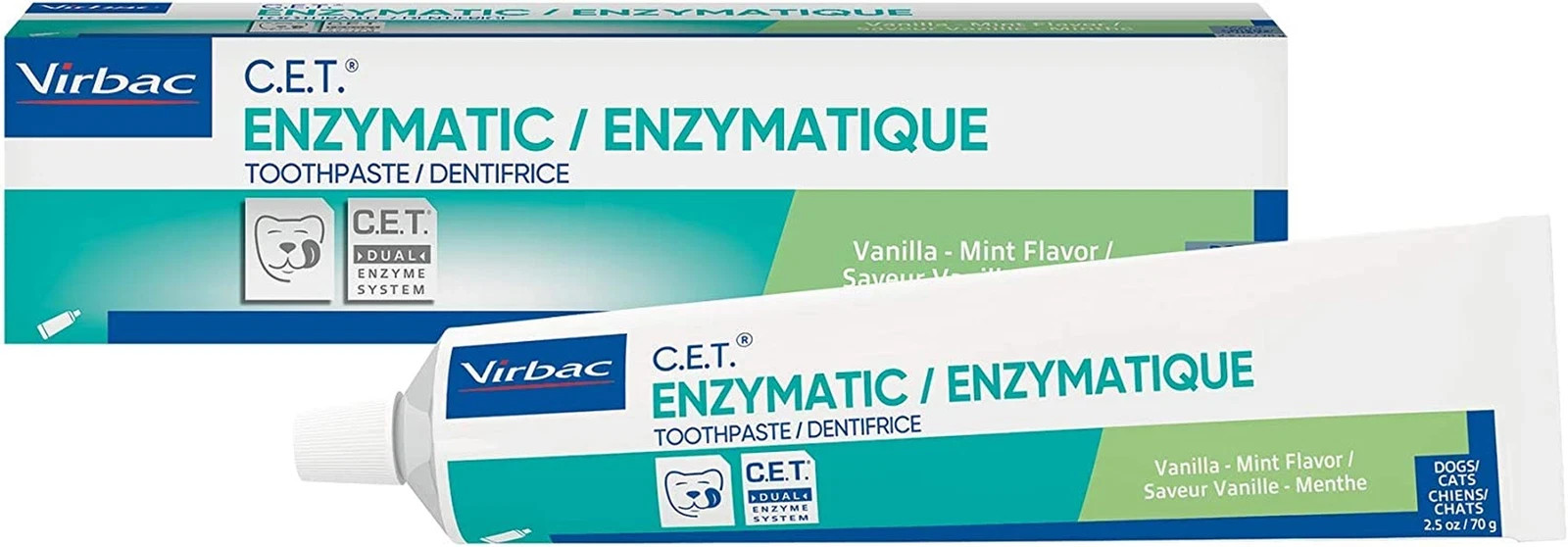

Photos from current listings. Actual item, color, and included accessories may vary.
Virbac CET Vanilla Mint Toothpaste Buying Guide
Virbac CET Vanilla Mint Toothpaste is an enzymatic dog and cat toothpaste formulated with a dual-enzyme system (glucose oxidase and lactoperoxidase) to inhibit plaque and tartar without fluoride or foaming agents. The primary trade-off in pet toothpaste is enzymatic efficacy versus flavor acceptance: pets that reject the taste will not tolerate brushing regardless of formula strength. The decision rule is simple—buy CET Vanilla Mint only if your pet accepts minty flavors and you commit to daily brushing; otherwise choose a poultry or malt flavor from the same enzymatic line.


At a glance
- Brand
- Not synced yet
- Model
- Not synced yet
- MPN
- Not synced yet
- Category
- Personal Care & Hygiene
- Status
- Offers available
- Data updated
- Nov 15, 2026
Current offers
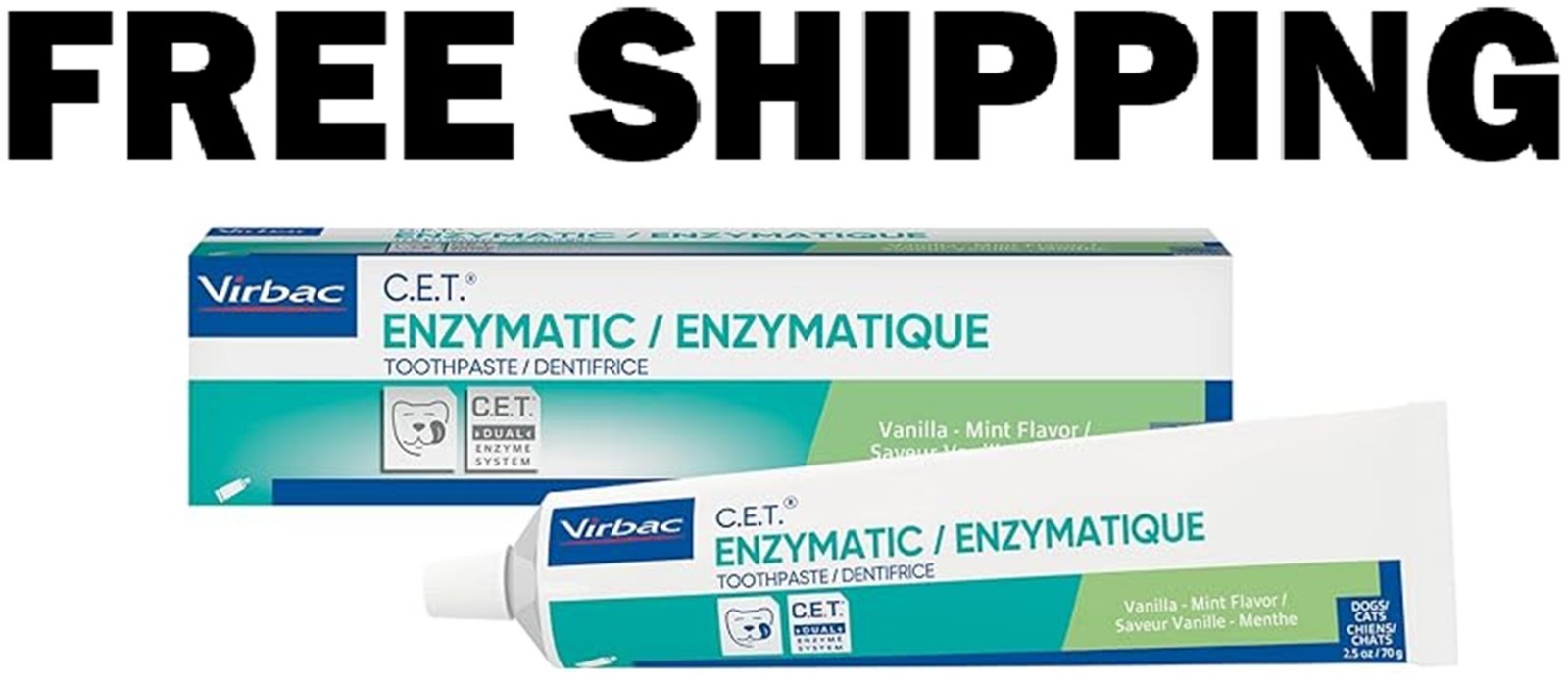
Highlights
- Dual-enzyme system: glucose oxidase produces hydrogen peroxide; lactoperoxidase converts it to hypothiocyanite, inhibiting plaque-forming bacteria without fluoride.
- Fluoride-free and foaming-agent-free formula is safe when swallowed—critical because pets cannot rinse and will ingest the paste.
- Vanilla mint flavor masks the salty enzyme base; pets that reject mint should use CET poultry or malt flavors with identical enzymatic activity.
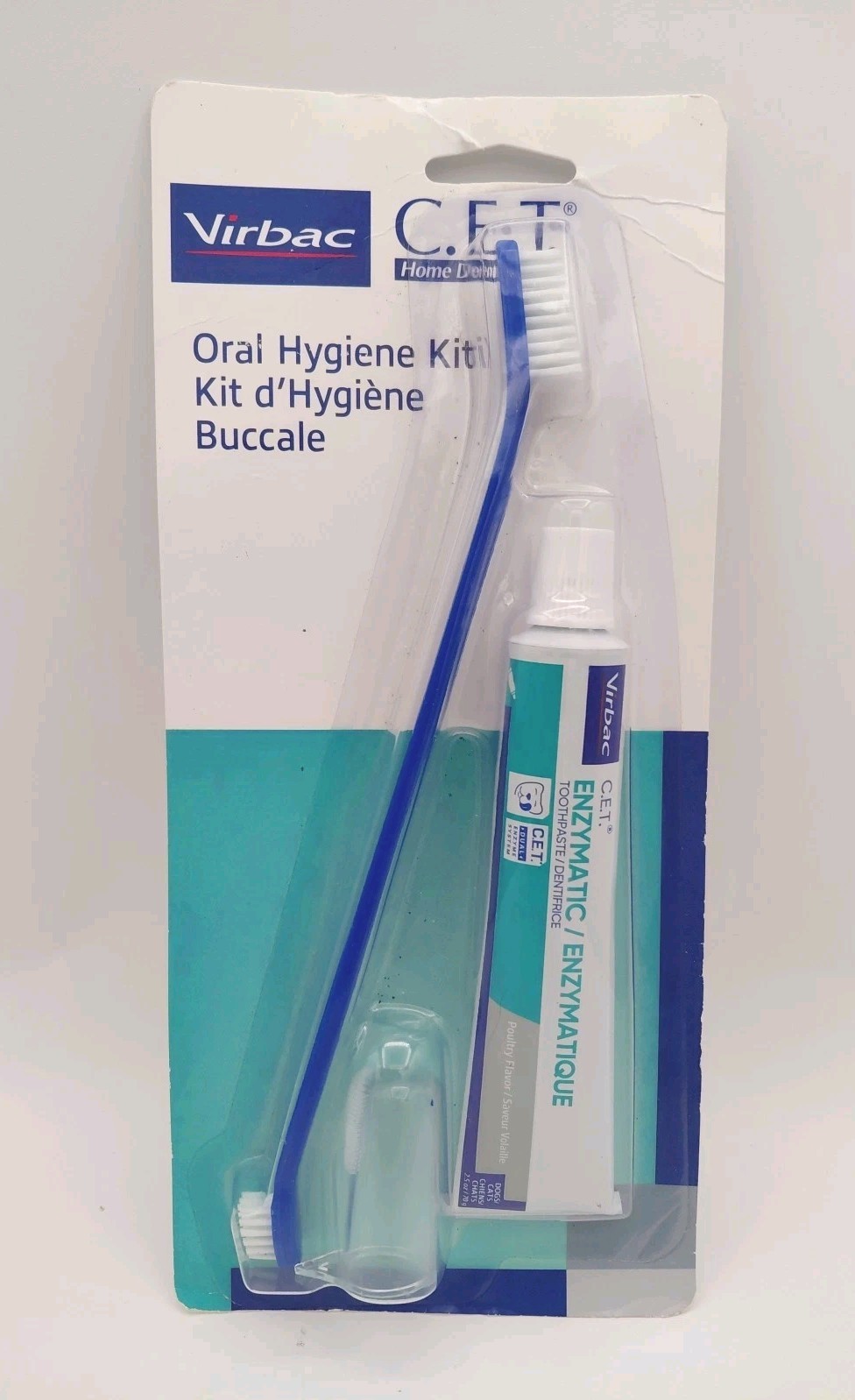
- Compatible with finger brushes, pet toothbrushes, and CET oral hygiene chews; does not replace mechanical plaque removal from brushing.
Best use cases
- Best fit: dogs and cats already accustomed to minty toothpaste and daily brushing—pair with a soft-bristle pet toothbrush or finger brush for plaque control.
- Best fit: multi-pet households where one pet accepts mint and another needs poultry flavor—buy both CET flavors; the enzymatic base is identical, so only palatability changes.
- Wrong fit: pets with mint aversion or first-time brushers—start with CET poultry flavor to build acceptance, then transition to vanilla mint if desired.
- Wrong fit: owners seeking a chew-only solution—enzymatic paste requires contact with teeth via brushing; CET chews are a separate mechanical adjunct, not a substitute.
Buying tips
- Match flavor to pet acceptance: vanilla mint suits pets that tolerate minty human toothpaste smells; poultry or malt suits picky pets or first-time brushers.
- Verify the tube lists glucose oxidase and lactoperoxidase—CET enzymatic activity depends on both enzymes; flavors without these are not equivalent.
- Choose the 2.5 oz tube for single-pet households brushing daily (roughly 2–3 months) and the larger tube only for multi-pet homes to avoid expiration.
- Pair with a pet toothbrush sized to your pet's mouth—finger brushes for small breeds and cats, angled soft-bristle brushes for medium and large dogs.
Specs
| Enzyme System | Glucose oxidase + lactoperoxidase |
|---|---|
| Flavor | Vanilla mint |
| Fluoride | Fluoride-free, swallow-safe |
| Pet Suitability | Dogs and cats |
Alternatives to compare

Related searches
What to check before buying
- Confirm your pet has no mint aversion—try a small smear on the paw or lip before committing to a full tube.
- Check that your pet toothbrush or finger brush fits your pet's mouth size; a brush too large causes resistance and ineffective brushing.
- Verify the tube is stored at room temperature and capped tightly—enzymatic activity degrades if the paste dries out or is exposed to heat.
- Ensure you can brush at least 3–4 times per week; enzymatic paste needs contact time with teeth to inhibit plaque, so infrequent use limits benefit.
FAQ
Data sources: eBay / Amazon listings and product attribute feeds Data updated Nov 15, 2026.
Some links on this page are affiliate links. If you buy after clicking one, we may earn a commission at no extra cost to you. This does not change which products appear here or their order. Affiliate disclosure.