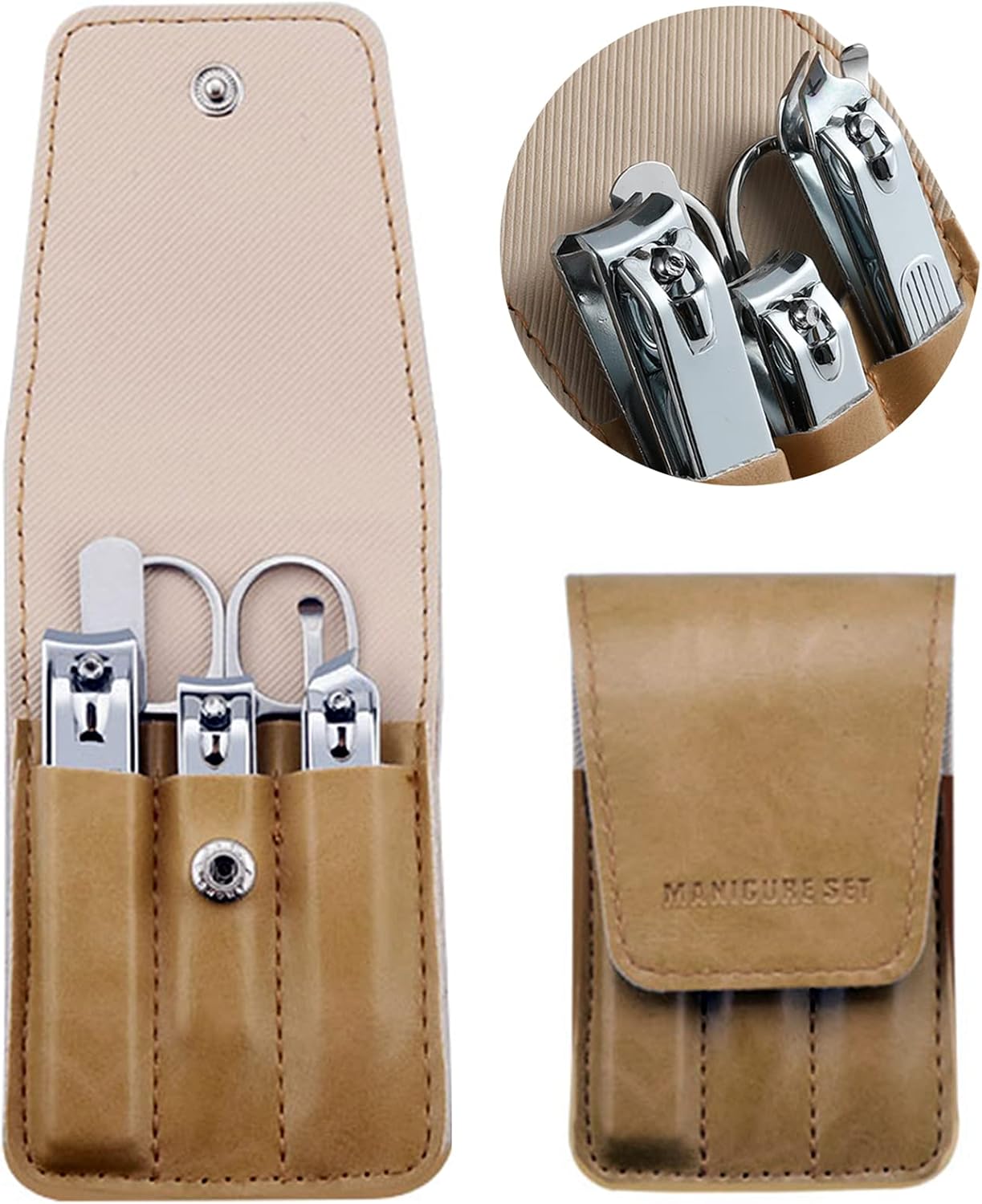

Photos from current listings. Actual item, color, and included accessories may vary.
Fingernail Clipper Buying Guide
Fingernail clippers are small lever-action cutting tools where steel grade, joint geometry, and jaw profile determine whether you get a clean, repeatable cut or a crushing, jagged edge. The core trade-off is between stamped carbon-steel bodies with riveted pivots (cheap, prone to jaw misalignment) and forged or CNC-machined stainless with a screwed or reinforced pivot (precise, durable, springy action). Buy forged stainless with a tight pivoted joint and a curved jaw for fingernails; skip pot-metal or loose rivet builds for anything beyond occasional touch-ups.


At a glance
- Category
- Nail Care & Manicure
- Data updated
- Nov 15, 2026
Current offers
Highlights
- Forged or CNC-machined stainless steel (440C or equivalent) holds a sharp edge far longer than stamped 201/430 steel bodies with plated finishes.
- A screwed or pinned pivot with minimal lateral play keeps the cutting jaws aligned; loose riveted pivots are the main cause of tearing and splitting nails.
- Curved concave jaws suit fingernails, while straight or slightly convex jaws are for toenails—using one tool for both dulls and misaligns the edge.
- Lever-spring geometry: a properly tempered spring returns the lever fully and gives a short, controlled squeeze; soft springs cause partial cuts and double-clipping.
Best use cases
- Seniors or anyone with limited grip strength: pick a large-loop lever or a squeeze-lever design with an oversized thumb pad and a light spring—skip tiny travel clippers with stiff springs.
- Daily home grooming of fingernails: a single curved-jaw forged stainless clipper with a screwed pivot is the right tier; skip multi-piece kits where the clipper is the weakest component.
- Toenail and thick-nail trimming: choose a straight-jaw, heavy-duty clipper with a longer lever arm; do not use a fingernail clipper on thick toenails—it flexes and chips the edge.
- Travel and purse carry: a compact clipper with a built-in nail catcher or a capped jaw prevents snags; skip open-jaw budget clippers that dull against keys and coins.
Buying tips
- Match jaw width to nail size: fingernail jaws are typically 10-14 mm across; toenail clippers need 14-18 mm and a longer lever for leverage.
- Check the pivot: a screw or adjustable pin lets you tighten play over time; a plain rivet cannot be serviced and is the first failure point.
- Steel grade matters more than finish: 440C or 420J2 stainless with a matte or satin finish resists rust and holds an edge; mirror-plated carbon steel flakes and dulls.
- For weak grip, a lever with a 1:3 or greater mechanical advantage (long handle, short jaw) cuts with less force than a compact 1:1 clipper.
Specs
| Jaw Profile | Curved fingernail vs straight toenail |
|---|---|
| Steel Grade | Forged 440C/420J2 vs stamped carbon |
| Pivot Type | Screwed/pinned vs riveted |
| Lever Style | Standard vs large-loop/ratchet |
Related searches
What to check before buying
- Measure nail width: fingernails generally fit a 10-14 mm jaw; anyone with broad nails or thick nails should size up to a 14-16 mm jaw.
- Check hand strength and dexterity: if squeezing a standard clipper is painful, choose a large-loop or ratchet-style lever before buying any kit.
- Confirm rust resistance for your environment: high-humidity bathrooms favor 440C stainless or a removable nail catcher that lets the tool dry fully.
- Verify companion tools: a glass file or fine emery board is needed to smooth the cut edge; clippers alone leave micro-snags that peel into splits.
FAQ
Data sources: eBay / Amazon listings and product attribute feeds Data updated Nov 15, 2026.
Some links on this page are affiliate links. If you buy after clicking one, we may earn a commission at no extra cost to you. This does not change which products appear here or their order. Affiliate disclosure.