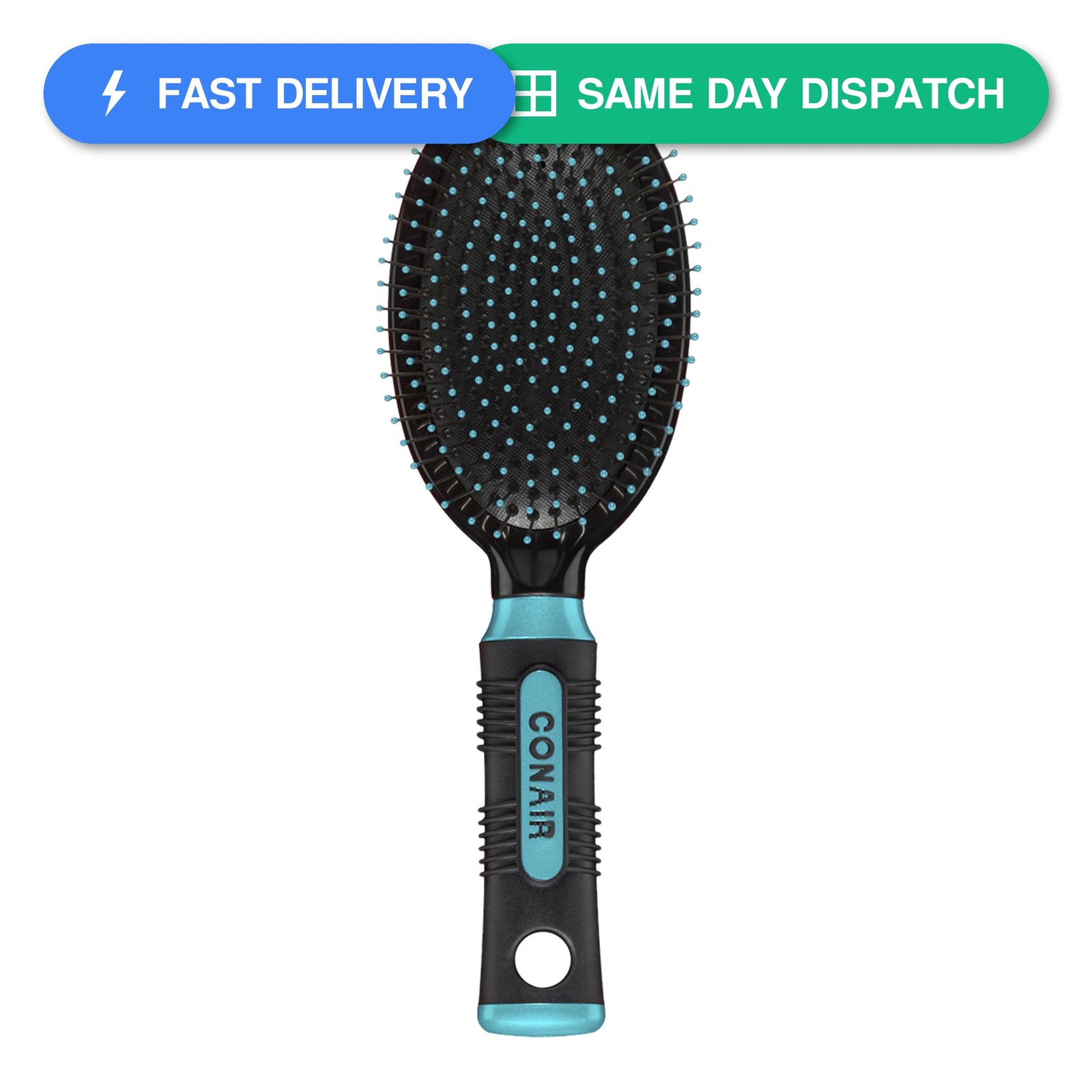

Photos from current listings. Actual item, color, and included accessories may vary.
Conair Hair Brush Buying Guide
Conair hair brushes span a wide range of construction grades, from inexpensive molded-plastic paddle brushes to boar-bristle and metal-barrel styling tools. The primary trade-off is bristle material and vent/barrel construction: nylon and boar blends detangle without static, while metal barrels and hard plastic pins speed blow-drying but can snag fine hair. The decision rule is simple: match bristle stiffness and barrel type to hair texture and styling method, and skip any brush with exposed sharp pin tips or loose ferrule joints.


At a glance
- Category
- Hair Styling Tools
- Data updated
- Nov 15, 2026
Current offers
Highlights
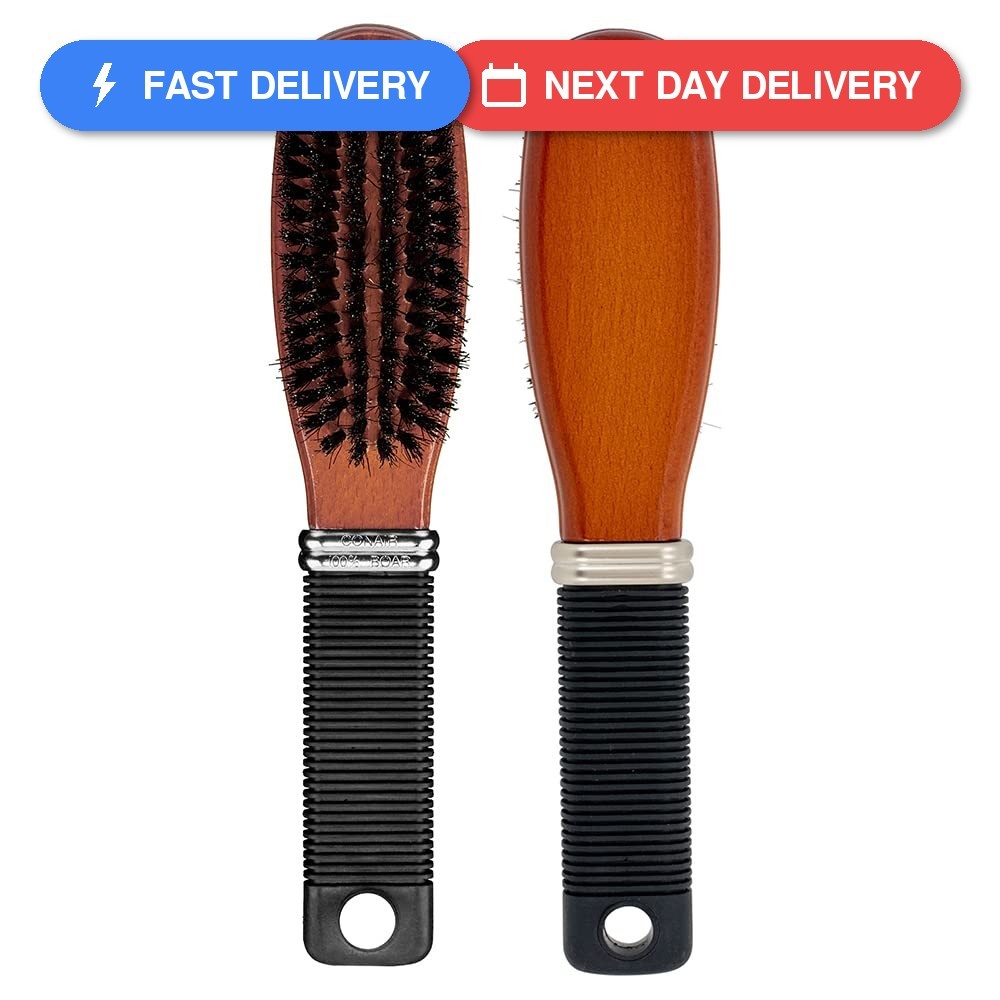
- Boar-bristle brushes distribute scalp oils and smooth cuticles; nylon pins detangle wet hair with less breakage than rigid boar alone.
- Vented or tourmaline-ceramic barrels cut blow-dry time by allowing airflow through the brush head and reducing hot-spot heat damage.
- Cushion bases with flexible air holes absorb tension and prevent bristle pull; rigid bases are for styling control, not detangling.
- Metal-barrel round brushes retain heat for shaping, while plastic-barrel versions are lighter but hold less curl memory.
Best use cases
- Best fit: boar-bristle or boar/nylon mix for daily smoothing and shine on medium-to-thick hair; skip pure nylon pin brushes if you have fine, tangle-prone hair.
- Best fit: vented paddle brush for fast blow-drying and detangling wet hair; skip round metal brushes for wet detangling—use them only on dry or damp hair.
- Best fit: round brush with ceramic-coated barrel for volume and bend at ends; skip it for very short hair or tight curls where a wide-tooth comb is safer.
- Wrong fit: hard plastic pin brushes on fine or thinning hair—switch to soft boar or flexible nylon to avoid scalp scratches and breakage.
Buying tips
- Choose bristle spacing wider than your hair density: tight clusters suit thick hair, sparse clusters suit fine hair to prevent pull.
- For round brushes, match barrel diameter to desired curl: smaller barrels create tighter bends, larger barrels smooth and add root lift.
- Check ferrule and handle joints: a sealed, seamless handle resists water intrusion and bristle shedding better than glued two-piece construction.
- Boar bristle grades range from soft to stiff; first-time buyers should pick a soft-to-medium blend to avoid scalp irritation.
Specs
| Bristle Type | Boar / Nylon / Boar-Nylon blend |
|---|---|
| Barrel Material | Ceramic / Metal / Plastic / Vented |
| Brush Shape | Paddle / Round / Cushion / Vent |
| Hair Type Fit | Fine / Medium / Thick / Curly |
Related searches
What to check before buying
- Measure your hair length and thickness: short fine hair pairs with small cushioned brushes; long thick hair needs a wide paddle or large round brush.
- Confirm your styling method—blow-dryer use requires heat-resistant bristles and a vented or ceramic barrel; air-drying suits boar or nylon detanglers.
- Check handle grip and weight for your hand size; heavier metal barrels tire the wrist during long styling sessions.
- Verify bristle tip condition: ball-tipped nylon pins protect the scalp, while cut or exposed metal tips scratch and split ends.
FAQ
Data sources: eBay / Amazon listings and product attribute feeds Data updated Nov 15, 2026.
Some links on this page are affiliate links. If you buy after clicking one, we may earn a commission at no extra cost to you. This does not change which products appear here or their order. Affiliate disclosure.