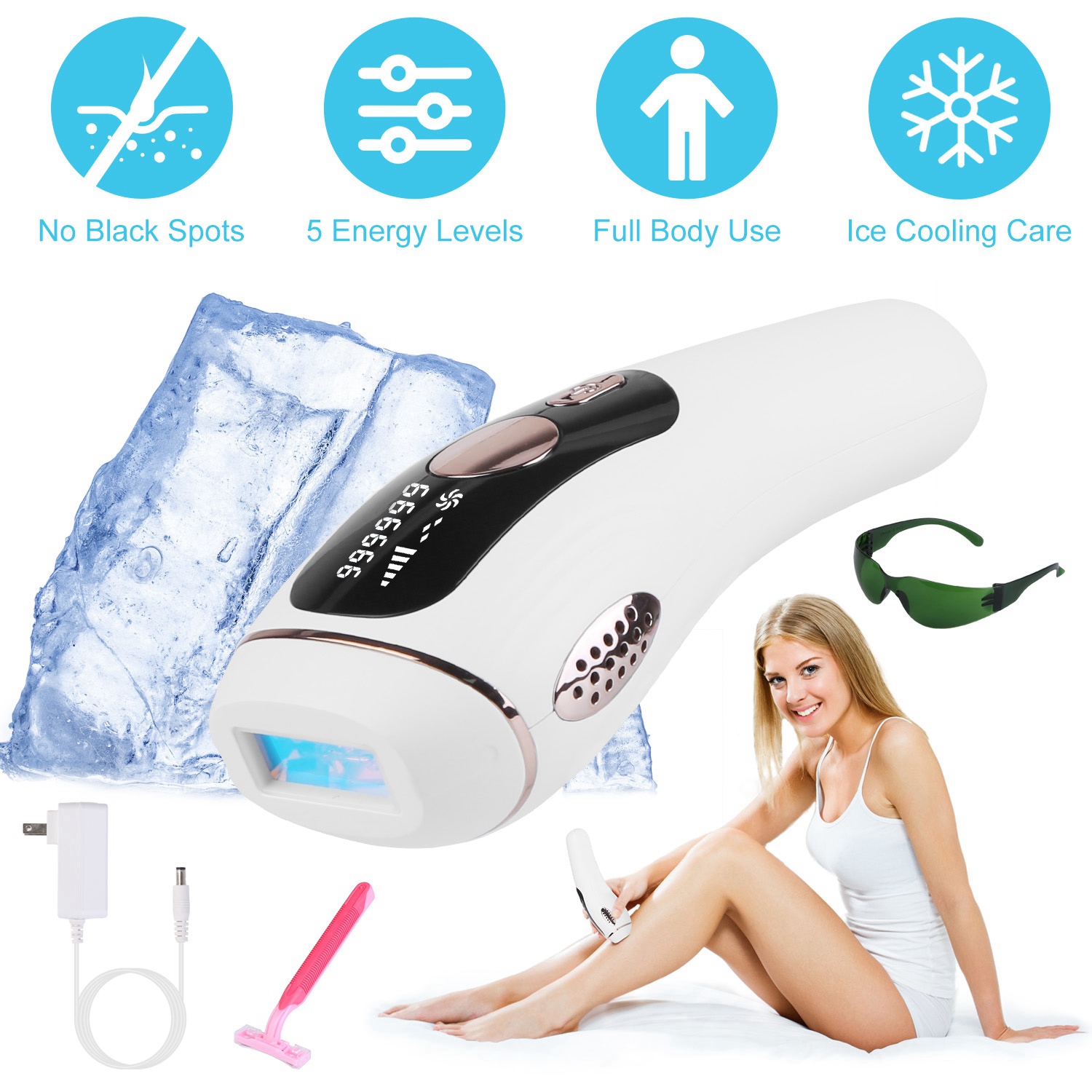

Photos from current listings. Actual item, color, and included accessories may vary.
Laser Hair Removal Buying Guide
Laser hair removal covers both at-home intense pulsed light (IPL) devices and professional clinic lasers, with the key trade-off being peak optical energy (fluence) and cooling versus portability and cost. Durable at-home options deliver ≥5 J/cm² fluence with active ice or sapphire cooling and genuine quartz lamps; sub-3 J/cm² plastic-lamp units are comfort compromises that slow results. The decision rule: match device energy and cooling to your skin tone and hair color, and treat flash count as a consumable lifespan, not a headline number.


At a glance
- Category
- Hair Removal Care
- Data updated
- Nov 15, 2026
Current offers
Highlights
- At-home IPL effectiveness hinges on fluence (J/cm²) and lamp type: quartz lamps sustain higher output over 100k+ flashes; plastic or xenon lamps degrade faster.
- Ice-cooling (sapphire or semiconductor cold plate) protects the epidermis and enables higher energy settings, especially on darker Fitzpatrick IV–V skin.
- Flash count is a lifespan spec: 300k–500k flashes suits one full-body user for years; 999,999 counts often reflect low-energy per flash, not superior durability.
- Clinic lasers (Alexandrite 755 nm, Nd:YAG 1064 nm) remain more powerful and faster per session than any consumer IPL, at higher per-session cost.
Best use cases
- Best fit for at-home: fair-to-medium skin (Fitzpatrick I–IV) with dark hair seeking maintenance on legs, underarms, and bikini line — pick a ≥5 J/cm² IPL with ice cooling.
- Wrong fit: deep brown-to-black skin (Fitzpatrick V–VI) or light blonde/red/gray hair — skip IPL entirely and choose Nd:YAG clinic laser, which targets melanin more safely at 1064 nm.
- Best fit for men: dense beard line, chest, and back — select a high-fluence device with a large treatment window (≥3 cm²) and a corded power supply for sustained output.
- Skip: battery-only pocket IPLs under 3 J/cm² with no cooling — they under-treat and extend the course well beyond the standard 8–12 sessions.
Buying tips
- Check fluence first: at-home IPL should reach at least 5 J/cm² at the top setting; below 3 J/cm² is comfort-tier and needs more sessions.
- Match wavelength: 530–810 nm IPL suits light-to-medium skin; 1064 nm Nd:YAG is the safe choice for darker skin tones.
- Prefer quartz lamps and active cooling (sapphire or ice plate); plastic lamps and passive air cooling limit energy and lifespan.
- Treat flash count as consumable: 300k–500k flashes covers years of single-user sessions; ignore inflated 999,999 claims without fluence data.
Specs
| Light Source | IPL (530–810 nm) vs Nd:YAG 1064 nm |
|---|---|
| Peak Fluence | ≥5 J/cm² effective; <3 J/cm² comfort-tier |
| Cooling Type | Sapphire/ice plate vs passive air |
| Flash Lifespan | 300k–500k flashes typical fixed-lamp |
Related searches
What to check before buying
- Confirm your Fitzpatrick skin type (I–VI) and hair color: IPL is effective mainly on dark hair against lighter skin; very dark skin needs Nd:YAG.
- Measure treatment areas: leg and back sessions need a window ≥3 cm² and a cord long enough to reach a mirror or outlet.
- Check voltage/plug standard for your region (100–240 V or local plug type) and whether the unit is corded or rechargeable.
- Budget for replacement lamps or heads if the device uses a consumable cartridge; fixed-lamp units avoid this but cap total lifespan.
FAQ
Data sources: eBay / Amazon listings and product attribute feeds Data updated Nov 15, 2026.
Some links on this page are affiliate links. If you buy after clicking one, we may earn a commission at no extra cost to you. This does not change which products appear here or their order. Affiliate disclosure.