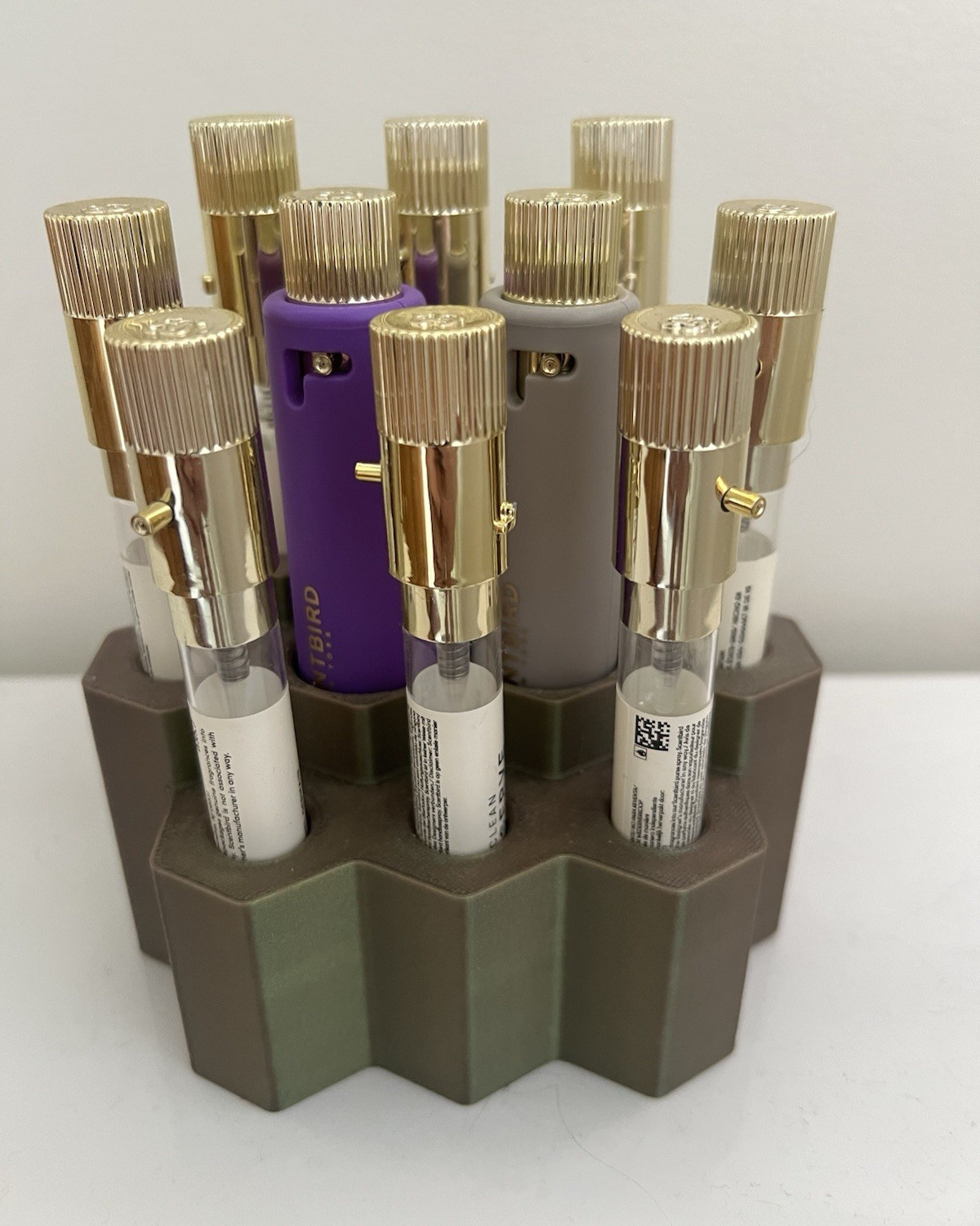

Photos from current listings. Actual item, color, and included accessories may vary.
Fragrance Storage Buying Guide
Fragrance storage is the discipline of protecting scent integrity — not just tidying bottles — by controlling light, heat, humidity, and physical shock. The core trade-off is between open-air display (easy access, maximum UV/oxidation exposure) and sealed, UV-blocking enclosures (preservation, reduced visibility). The decision rule: any bottle you intend to keep past 12 months must live in a dark, stable-temperature, upright, non-reactive environment; anything else is display, not storage.


At a glance
- Category
- Fragrance Display & Storage
- Data updated
- Nov 15, 2026
Current offers
Highlights
- UV radiation degrades fragrance molecules via photo-oxidation; amber or opaque glass, cabinet doors, and drawers block the 300–400 nm range that clear glass passes.
- Heat accelerates ester hydrolysis and alcohol evaporation; stable storage is 55–70°F (13–21°C) with low fluctuation — attics, bathrooms, and windowsills routinely exceed safe thresholds.
- Upright storage prevents continuous contact between juice and the atomizer gasket/collar, which is the leading cause of seal degradation and evaporation loss.
- Open-wire and acrylic tiered stands maximize airflow visibility but offer zero UV or thermal protection; enclosed wooden or MDF cabinets with glass doors are the minimum viable preservation tier.
Best use cases
- Best fit: a collector rotating 10+ bottles across seasons should choose a closed, UV-blocking cabinet with adjustable shelves and upright slots — skip open acrylic tiers entirely.
- Best fit: a daily-wear user with 3–5 bottles choosing a dresser-top organizer should pick an opaque or amber-glass tray with a lid, not an open wire stand.
- Wrong fit: storing vintage or discontinued formulations in a bathroom cabinet — steam and temperature swings from showers will degrade juice faster than open display in a cool bedroom. Skip bathroom storage for anything you value.
Buying tips
- Measure bottle heights before selecting tier spacing: standard 50 mL bottles run 3–4 in, 100 mL run 4.5–5.5 in, and tall flacons exceed 6 in — fixed-height acrylic stands often cap at 4 in.
- Choose materials by chemistry: glass and stainless steel are non-reactive; untreated wood and some plastics can absorb or off-gas; avoid PVC and polystyrene shelving in direct contact with bottle bases.
- For drawer inserts, confirm depth clearance: a standard 2.5–3 in drawer insert fits 30–50 mL bottles lying flat but not 100 mL standing upright — match insert depth to bottle diameter.
- Prefer modular or expandable systems over fixed-capacity stands; fragrance collections grow, and fixed 8-slot organizers become obsolete within one or two purchases.
Specs
| Material Grade | Glass / stainless / sealed acrylic / MDF |
|---|---|
| UV Protection | Opaque or amber vs clear-transparent |
| Tier Height Clearance | 3–6 in (50–100 mL bottles) |
| Enclosure Type | Open stand / lidded tray / closed cabinet |
Related searches
What to check before buying
- Measure your tallest bottle and widest flacon; confirm shelf height and slot diameter clear them with 0.25–0.5 in margin.
- Check the storage location's temperature stability — a hallway closet or interior cabinet is better than a bathroom or windowsill regardless of organizer quality.
- Confirm the organizer's footprint fits your dresser, shelf, or drawer depth, including door-swing or lid-clearance space.
- Verify material compatibility: glass, stainless, or sealed acrylic for direct bottle contact; avoid unsealed wood in humid rooms.
FAQ
Data sources: eBay / Amazon listings and product attribute feeds Data updated Nov 15, 2026.
Some links on this page are affiliate links. If you buy after clicking one, we may earn a commission at no extra cost to you. This does not change which products appear here or their order. Affiliate disclosure.